
Releases from ODOC Institutions
The Oklahoma Department of Corrections operates state prisons and community corrections across Oklahoma. It is not the Tulsa County Jail. A Tulsa County defendant committed to ODOC may first leave David L. Moss Criminal Justice Center through a transfer, remain confined at an institution outside the county, and later reach parole, community supervision, or discharge. Each stage has its own date and record.
Parole is conditional release from imprisonment with continued legal custody and supervision. Probation may be ordered instead of or after confinement. A supervision location in an ODOC result can therefore confirm that a person left prison without showing full sentence completion. Discharge normally marks completion of the applicable ODOC sentence, but another case, federal matter, immigration hold, or new booking still requires a separate check.
| ODOC event or status | What it establishes |
|---|---|
| Institution or incarcerated | The person remains in state corrections custody at the reported location. |
| Parole or community supervision | Secure confinement ended, but active supervision continues. |
| Discharged | The identified ODOC sentence has ended, subject to identity and other-case checks. |
| County transfer to ODOC | Tulsa County jail custody ended, but the person did not return to the community. |
| Tentative or projected date | An administrative estimate, not proof that physical release occurred. |
Confirm an ODOC Release
The ODOC Offender Lookup is the primary public search. An ODOC number is the best starting identifier because names and aliases can overlap. Match at least two identifiers before reading status, location or supervision, sentences, conviction county, reception information, and any dates actually displayed. Save the exact wording and access date.
- Search by ODOC number when known, then try exact name and supported identity variations.
- Open only a record whose identifiers and Tulsa County conviction details agree.
- Read status and location together. Separate incarceration, parole, probation, supervision, and discharge.
- Compare the state record with the Tulsa court judgment and any county transfer entry.
- Use ODOC records contacts for a documentary discharge when the public result is incomplete or unclear.
ODOC warns that its lookup recently changed data sources and has experienced unanticipated issues. An unexpected absence or status must be checked with spelling variations, the agency’s public data, and the relevant records office. A vanished Tulsa County roster name does not substitute for an ODOC reception, release, or discharge record.
ODOC Release Search Fields
The live interface controls which fields are available for a particular record. ODOC says its public downloadable data includes names, sentences, reception dates, status, and similar nonprivate details. Depending on the current result, the interactive record may also show identifiers, a physical description or photo, location or supervision, conviction county, offense, term, and status. Do not claim a field that is not visible.
| Field | How to use it |
|---|---|
| ODOC number | Distinguishes the state offender record from namesakes. |
| Status | Shows the agency’s current or historical custody term. |
| Location or supervision | Separates a prison placement from a community supervision placement. |
| Conviction county and offense | Connects the state record to the correct Tulsa County case. |
| Sentence and reception date | Provides state sentence context without calculating release independently. |
| Release or discharge field | Use the label exactly as displayed and corroborate it with records. |
ODOC’s public data route is a fallback, not a real-time replacement. A periodic snapshot can lag. Systems Quality Management questions may be directed to Renee Lanier at 405-740-6496 or renee.lanier@doc.ok.gov, as listed in the research source. Query only the requested identity and reconcile the data with the live record.
Note: Record the ODOC retrieval date because a later custody, supervision, discharge, or new-case event can change the person’s status.
ODOC Tentative Release Date Limits
The ODOC offender information guidance does not promise a universal public release date. It says a particular inmate’s release date is confidential for general inquiries absent a legitimate need, and it provides the inmate with days remaining each month. The inmate may share a calculated date. ODOC calls that date tentative because earned-credit level, misconduct, and achievement credits can change it.
The Oklahoma Pardon and Parole Board glossary defines projected release date, or PRD, as ODOC’s estimate of when an offender will be released. Monthly Board results can list a parole-eligibility date and PRD in separate columns. Neither a scheduled hearing nor a favorable action proves that the person physically left an institution. Processing, stipulations, other sentences, detainers, or rescission may still intervene.
The official ODOC tentative-date and credit guidance appears in this capture from the ODOC offender information page.
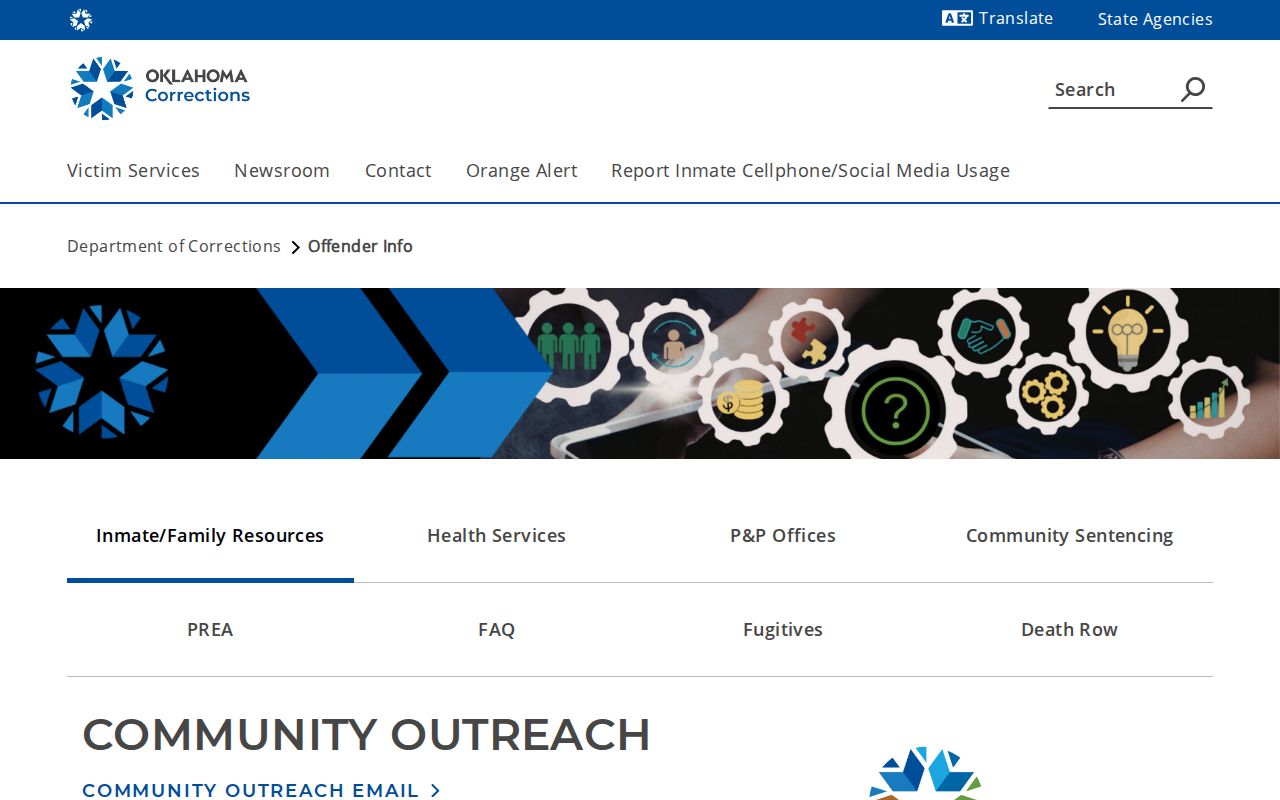
The screenshot supports the date limitation. It does not create a public date for a person whose live ODOC record does not display one.
ODOC Credits and Tulsa Sentences
Oklahoma’s earned-credit framework for state inmates appears in 57 O.S. §138 and ODOC policy. Class levels, behavior, work or program participation, achievement credits, and disciplinary loss can affect the state calculation. Presentence jail credit, post-sentencing county-jail time, and deferred-reception credit can also matter when a Tulsa County defendant waits for state reception.
For offenses listed in 21 O.S. §13.1, the law requires service of at least 85 percent of the imposed imprisonment before the release or parole consequence specified by the statute. The list is offense-specific and has changed over time. Do not apply that rule to every Tulsa conviction. Concurrent and consecutive sentences, the offense date, credits, and parole action require an ODOC sentence audit rather than a homemade calendar calculation.
This state formula must not be imported into a county jail sentence. TCSO executes the court’s commitment and release orders for county custody. No Tulsa County jail good-time table or weekend early-release rule was verified. A historical ODOC release should be confirmed from the agency event, not reconstructed from current credit law.
ODOC Parole Versus Discharge
Oklahoma divides parole decisions from parole supervision. The Pardon and Parole Board conducts proceedings and publishes dockets and results. ODOC Probation and Parole Services supervises people in the community. A Board docket is a consideration schedule, and a favorable result may still require further action. It is not the physical release record.
After a favorable result, check ODOC and OK VINE for the executed movement and current reporting agency. Terms such as “Parole to Street” can still carry prerelease stipulations. If the ODOC result shows a Tulsa supervision location, use the current probation and parole directory and follow the assigned officer’s official instructions. Under supervision is not fully discharged.
An absconder or fugitive notation is another distinct status. ODOC provides an official fugitive search and warns the public not to act on a listing. The notation can indicate an alleged failure to remain in required contact, but it does not show the person’s present location, prove a new offense, or supply the historical prison release date. Confirm an active warrant with the issuing authority. For Tulsa supervision records, the current ODOC directory is the proper route because the community corrections office is not a jail or public walk-in inmate roster.
- Parole eligibility
- The date or stage when parole consideration may occur under applicable law.
- Board action
- A decision or recommendation in the parole process, not automatic physical release.
- Physical release
- The executed ODOC movement from secure confinement.
- Discharge
- Completion of the relevant ODOC sentence, distinct from active supervision.
Note: Keep eligibility, Board action, physical release, supervision, and discharge as separate ODOC events with separate supporting records.
ODOC Discharge Records Contact
For documentary confirmation, use ODOC Legal Services and its Sentence Administration, Offender Records and Registries routes. Public information remains available under Oklahoma’s Open Records Act unless state or federal law makes it confidential. ODOC public data omits health, Social Security, banking, and other private information.
ODOC Offender Records and Discharges
Closed Records: 405-425-2691
Records inquiries: osor@doc.ok.gov
Discharges only: osordischarges@doc.ok.gov
Agency contact: ODOC contact directory
Hours: Call to confirm
Ask for the precise state record needed and provide the ODOC number, full name, conviction county, and sentence context. The agency also links an Authorization for Release of Incarceration/Supervision Records. A signed authorization may be needed for information beyond public data. The “Closed Records” label does not mean every discharge fact is unavailable.
The Oklahoma Open Records Act favors access while preserving records made confidential by state or federal law. ODOC applies those limits and may withhold private medical, financial, victim, security, or protected identity information. Ask for segregable public portions if a requested file mixes public and confidential fields. A records response can document ODOC custody or discharge, but it does not certify the person’s status in every other jurisdiction.
Tulsa County Transfer to ODOC
A reliable county-to-state pattern uses both custodians. The Tulsa court judgment commits the defendant to ODOC. The DLMCJC roster later drops the booking. An ODOC record then shows reception or an institution. Together, those records show departure from Tulsa County custody through transfer into state custody, not a community release.
A later ODOC parole, supervision, or discharge entry is a second event. The complete Tulsa County released inmate search helps trace the county record before the state record begins. If another authority appears after ODOC release, follow that destination before concluding the person is free of custody.
Use OK VINE as a timely notification and status channel for participating movements, then verify the result with ODOC. VINE can lag, and it does not replace parole notification from the Board. For authorized victim-specific release questions, ODOC Victim Services lists 405-425-2607 and victim.services@doc.ok.gov.
Note: A Tulsa County transfer date, ODOC prison release date, supervision start, and sentence discharge date may all be different.