
Tulsa County Projected Versus Actual Release
A projected release date is an administrative estimate based on the sentence data and credits recorded at that point. Oklahoma agencies also use the term tentative release date. Actual release is the physical custody event. The two can differ because the estimate can move, another authority can hold the person, or release processing can take place after the legal date is calculated.
Pretrial custody is different. A person awaiting trial at the David L. Moss Criminal Justice Center does not have a sentence-based release date. Bond, dismissal, a court order, a plea or judgment, and active holds can change the path. A sentenced county-jail inmate may have a court commitment and credit entries, but Tulsa County does not publish a verified county good-time table that permits a public calculation.
The distinction also prevents a state transfer from being called freedom. A person can leave Tulsa County custody and enter ODOC, federal, immigration, or another county's custody. Check the receiving system whenever a transfer or detainer appears.
The TCSO jail information channel supplies the county contact route and separately directs immigration questions to ICE. That division is useful when a county exit is followed by another agency's custody.
Find Tulsa County Inmate Release Dates
Start with custody type. Tulsa's current-inmate portal serves county custody, while ODOC records serve state sentences. Court dockets explain legal authority but do not replace the physical release record. The Tulsa County released-inmate search gives the broader path for a release that has already happened.
- Identify whether the person is pretrial, serving a county sentence, committed to ODOC, or held by another authority.
- Match the person with a booking number, ODOC number, birth information, and case number when available.
- For a Tulsa jail case, read the OSCN Tulsa docket for bond, commitment, jail-credit, sentence, and release-related orders.
- Ask TCSO for the custody or release transaction when a county release or transfer must be documented.
- For a state sentence, use ODOC Offender Lookup and read only the fields that the live result displays.
- Keep parole eligibility, a Board result, a tentative date, and actual release as separate events.
- After release, confirm the historical agency record rather than rebuilding the date from a current statute.
ODOC warns that its offender lookup moved to a new data source and has experienced unexpected issues. Try identifier and name variations, then corroborate a missing or surprising result. Match at least two identity details. A supervision status may show that prison custody ended while the sentence remains active.
If the live result does not publish a tentative date, do not infer one from the sentence line. ODOC public bulk data can support identity and status checks, but a periodic file may lag and does not replace the agency's current sentence audit. For a released person, look for a historical discharged or release status and obtain the documentary record when the exact date or manner matters.
Note: A date shown for one sentence does not clear a second case, warrant, detainer, or receiving agency hold.
ODOC Tulsa County Date Limits
ODOC does not promise a universal public projected date. Its official FAQ states that a particular inmate's release date is confidential for general inquiries absent a legitimate need, such as a judicial or law-enforcement need. ODOC gives the incarcerated person the days remaining each month. That person may share the calculated date. When the public interface shows a date, preserve the exact label and warning rather than changing “tentative” into “scheduled.”
The ODOC Offender Information page explains the tentative-date and earned-credit limits. The manifest capture below documents that official guidance.
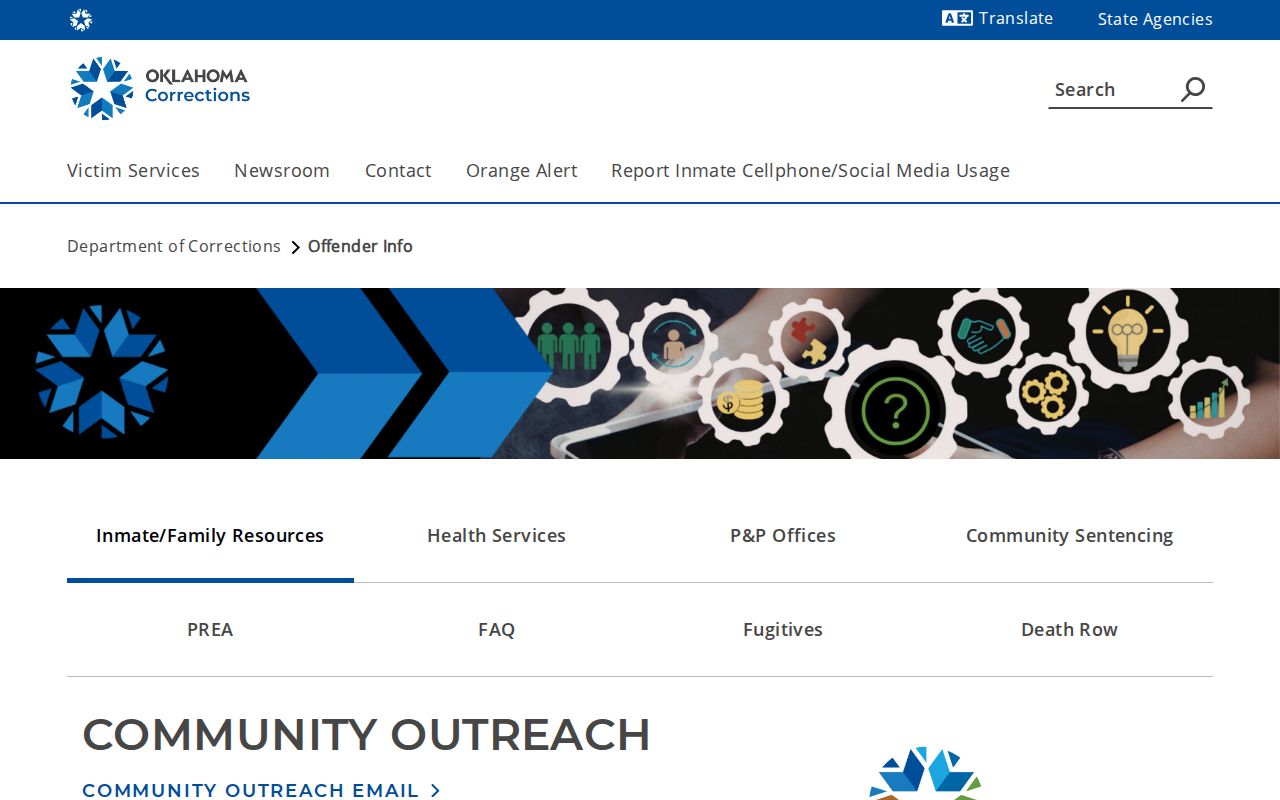
The guidance confirms why a public calculator cannot replace Sentence Administration. Earned-credit class, misconduct, achievement credits, sentence structure, and restrictions can change the agency's figure.
Tulsa County State Sentence Credits
Oklahoma's earned-credit law is 57 O.S. §138. ODOC assigns eligible incarcerated people to class levels. The official credit guide lists zero days per month at Level 1, 22 at Level 2, 33 at Level 3, and 44 at Level 4. Statutorily eligible enhanced Level 3 and Level 4 classifications earn 45 and 60 days per month. These are ODOC figures, not a Tulsa County jail formula.
Class placement reflects the statute and ODOC policy, including behavior, work or program participation, and other criteria. Achievement credits may also apply. Misconduct can cause lost credit, and restoration is discretionary within eligibility rules. Meritorious credits under §138.1 can affect a record as well. A simple sentence-length subtraction misses these moving inputs.
The official statute capture below shows the controlling earned-credit source.
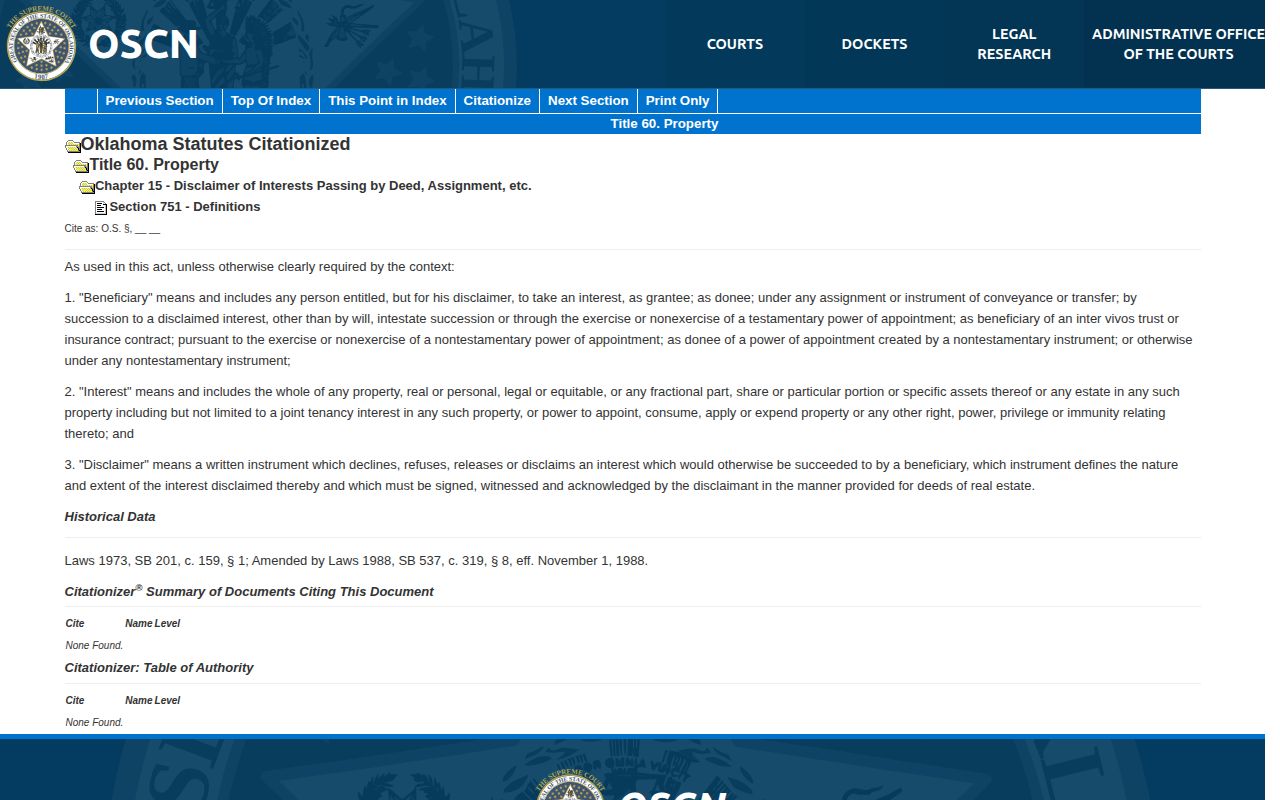
The statute must be read with the version and policies that apply to the sentence. Its class amounts do not establish an individual's current date without the person's recorded class, losses, achievements, and sentence audit.
Tulsa County Jail Credit Effects
Jail time can affect a later ODOC calculation. Official sentence guidance covers presentence jail credit when ordered and documented, post-sentencing county-jail time, and deferred-reception credit for a person sentenced to ODOC but waiting in the county jail. That is why adding a number of years to a judgment date often fails.
Sentence Administration must also reconcile concurrent and consecutive cases. Concurrent terms run at the same time to the extent ordered. Consecutive terms follow one another. Jail credit must attach to the correct case, and an unserved term or hold can remain after another term reaches its estimated end. Court documents provide the legal structure, while ODOC maintains the state calculation.
A deferred reception adds another timing issue. A person may have an ODOC judgment while still waiting in a county jail for state reception. The Tulsa roster can therefore show current county location even though the future sentence calculation belongs to ODOC. Preserve the county booking and transfer entries, then match the ODOC reception date. Those records explain the transition without treating the county exit as community release.
- Jail credit
- Custody time credited to a sentence under the court record and governing rules.
- Concurrent
- Terms ordered to run together.
- Consecutive
- Terms ordered to run one after another.
- Achievement credit
- Credit tied to approved programs or goals under applicable law and policy.
- Detainer
- A hold or request from another authority that can change the release destination.
Tulsa County Eighty-Five Percent Rule
For offenses specifically listed in 21 O.S. §13.1, Oklahoma requires service of not less than 85 percent of the imposed term of imprisonment before the release or parole treatment specified by the statute. The offense list and the law's application must be checked for the relevant offense and date. It is wrong to label every violent felony or every Tulsa conviction an “85 percent” case.
Parole eligibility also is not the projected release date. PPB result materials may place PE DATE and PRD in separate columns. The Board's glossary defines PRD as ODOC's estimate of release. A hearing, favorable vote, or recommendation can still be followed by stipulations, required action, detainers, sentence work, or another case. Confirm later with ODOC and the custody record.
Note: Percentage rules, credit rules, and parole rules answer different questions and should never be collapsed into one date.
What Changes Tulsa County Release Dates
A valid estimate can change as the underlying record changes. The agency's latest calculation has more value than an old copy, yet it remains tentative until release is executed. Each factor below should be checked in the system that owns it.
| Factor | Possible effect | Best record |
|---|---|---|
| Earned class | Changes the monthly credit rate | ODOC sentence and class record |
| Achievement or meritorious credit | May move an eligible date earlier | ODOC credit record |
| Disciplinary loss or restoration | May move the date later or restore part of a loss | ODOC disciplinary and sentence record |
| Jail credit | May count documented custody time | Court order and sentence audit |
| Concurrent or consecutive term | Changes how multiple sentences run | Judgment and ODOC audit |
| Detainer or hold | Can change the destination despite an ended term | Holding and receiving agencies |
| Parole action | Can affect the route but does not prove release | PPB result plus ODOC execution |
Other court orders, sentence modifications, and later cases can matter as well. Use the exact order. A docket summary or “case closed” label may not describe every count or other jurisdiction.
Tulsa County Release Calculation Limits
Tulsa County jail sentences cannot be calculated by importing ODOC's class formula. The sheriff carries out court commitments and release orders. The judgment, jail-credit notation, and any applicable county rule control that custody path. Research found no published Tulsa-specific good-time table and no verified weekend early-release rule. That absence should remain clear.
Ask for the commitment or release record rather than filling the gap with a state-prison rate. The TCSO Open Records request channel accepts a bounded request for the booking and release transaction. Include the full name, birth date if known, DLM or booking number, booking date range, arresting agency, case number, and exact records sought. Ask for a fee estimate and electronic copies where available.
This Tulsa-specific limit is crucial. A county sentence, an ODOC sentence, and a federal sentence each have their own custodian and computation. Use the records of the system that holds or held the person.
A sound state calculation begins with the imposed term, all cases, and whether the terms run together or in sequence. Add the credited jail days shown in the official record. Next, determine whether §13.1 or another restriction applies, then use ODOC's recorded class, achievement, and disciplinary credits. Keep the parole-eligibility date outside that arithmetic. The last agency calculation remains tentative until the release or transfer is completed.
Confirm Tulsa County Actual Release
For a pending state release, authorized users may use ODOC Victim Services at 405-425-2607 or victim.services@doc.ok.gov. ODOC identifies VINE as its preferred notification method. A release alert still needs agency confirmation when a transfer, hold, or exact time matters. The Tulsa County VINELink release check explains the one-person registration flow and cross-agency limits.
For documentary ODOC discharge confirmation, Legal Services lists Sentence Administration, Offender Records and Registries contacts. The release-specific mailbox is osordischarges@doc.ok.gov, and the Closed Records phone is 405-425-2691. A signed authorization may be needed for material outside public data. For county custody, obtain the TCSO release or transfer entry and pair it with the Tulsa court authority. The result should state release to community, discharge, supervision, or transfer only when the proper record supports that outcome.